The best WalkMe alternatives for 2026 (without the enterprise price tag)


TL;DR
- WalkMe is a capable digital adoption platform, but since the SAP acquisition it is built and priced squarely for large enterprises: no public pricing (a median of roughly $39k a year, per Vendr) and an 8–12 week rollout.
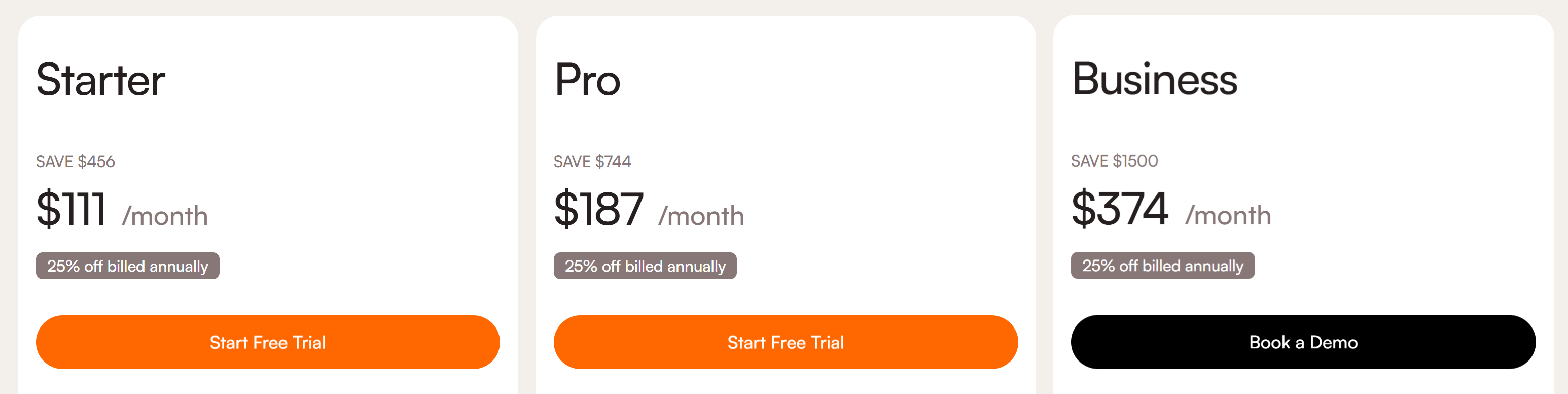
- Best value pick: Product Fruits — onboarding, a knowledge base, surveys and in-app help in one transparent price from $111/mo.
- Other strong options: UserGuiding, Userpilot, HelpHero, Userflow, Chameleon and Appcues, depending on budget and needs.
- Need enterprise-wide employee adoption across many internal apps instead? Look at Whatfix, Userlane or Apty.
- Sort by the one job you actually have before you shortlist tools.
WalkMe sells to the enterprise, and since SAP acquired it, even more so. That is the whole story behind most searches for an alternative. The pricing is quote-only, the rollout is a project, and the platform is designed to guide employees across dozens of internal systems.
If your actual job is helping new users find their way around one SaaS product, that is a lot of tool, contract and cost for the job. This guide splits WalkMe alternatives into the two things people actually mean by 'alternative', then ranks seven tools built for teams that want results without an enterprise commitment.
Why teams are leaving WalkMe
The SAP acquisition changed the roadmap. SAP bought WalkMe for $1.5 billion in September 2024. The direction since has been clear: WalkMe's future is enterprise employee adoption, embedded deeper into the SAP ecosystem. If you are a non-SAP, customer-facing team, that is a good reason to read the roadmap carefully before you renew.
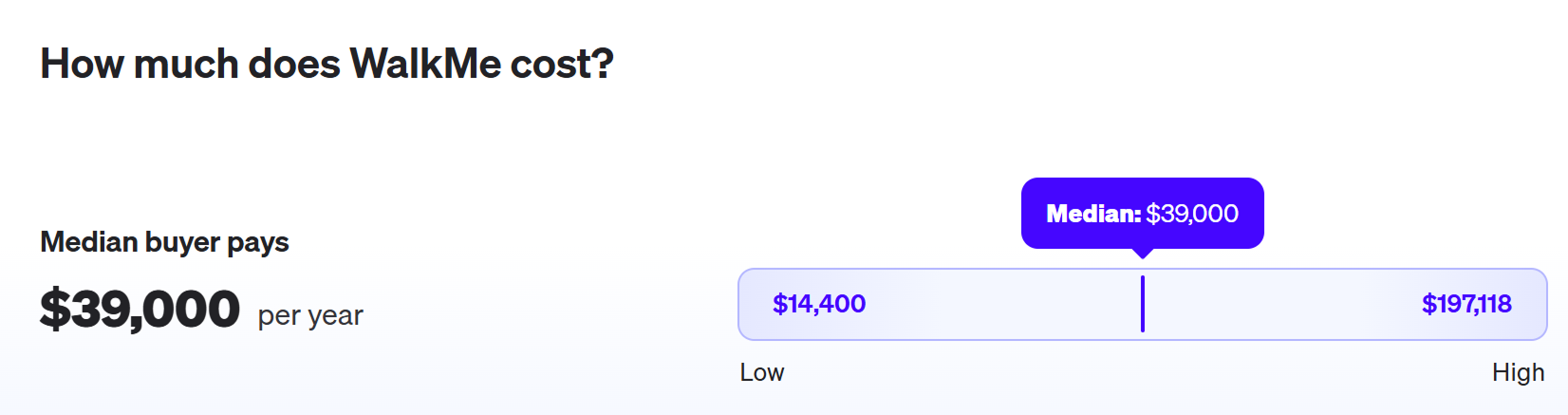
The price is built for the enterprise. WalkMe does not publish pricing. According to Vendr, the median buyer pays around $39,000 per year, with deals ranging from $14,400 all the way to $197,118. That is a range built for large rollouts, not a 15-person SaaS team that just needs in-app guidance and a help center.
Implementation is a project, not a setup. WalkMe typically takes 8–12 weeks to implement and often needs dedicated IT or a change-management team to run it. For a small product team, that overhead is the wrong tool for the job.
The initial setup and configuration can be complex and come with a learning curve, especially for more advanced use cases. Creating, updating, and maintaining content also takes time.
— Customer success engineer · G2
It was built for employees, not customers. WalkMe's core strength is guiding employees across many internal applications. If your job is onboarding users inside your own product, you are paying enterprise prices for a use case the platform was not designed around.
First, decide which alternative you actually need
WalkMe does two very different jobs, so the right replacement depends on which one you are hiring for.
If you need enterprise employee adoption (guiding staff across internal systems, change management, software rollouts at scale), stay in WalkMe's true peer group and run a proper evaluation. Whatfix, Userlane and Apty all play in that enterprise, employee-facing space, with the governance and support to match. Product Fruits and the tools below are not built for that job, and we will not pretend otherwise.
If you need product onboarding inside your own app (tours, checklists, in-app messages, knowledge base, surveys, help center), that is what the seven tools below are for. This is where most teams leaving WalkMe actually land, and where you will save the most.
WalkMe alternatives at a glance
The 7 best WalkMe alternatives for product teams
1. Product Fruits — best value
AI-native onboarding and engagement platform used by 1,300+ companies. It is the closest thing to a full WalkMe replacement for product teams, at a fraction of the cost.
Pros:
- One snippet covers tours, checklists, hints, announcements, surveys, in-app help center and a knowledge base.
- Elvin AI creates onboarding flows for you.
- Transparent pricing that undercuts every enterprise DAP.
Cons:
- Web-first, so if mobile in-app guidance is your primary need, a dedicated mobile tool may go deeper.
Pricing: $111/mo billed annually · G2: 4.7
2. UserGuiding — simple onboarding for startups
No-code onboarding tool popular with early-stage teams. It covers the essentials (tours, checklists, tooltips) and is an accessible entry point for startups seeking foundational onboarding.
Pros:
- Easy, no-code setup; a friendly starting point for small teams that only need the basics.
Cons:
- Per-MAU tiers escalate quickly as you grow, and the annual commitment is required to hit the entry price.
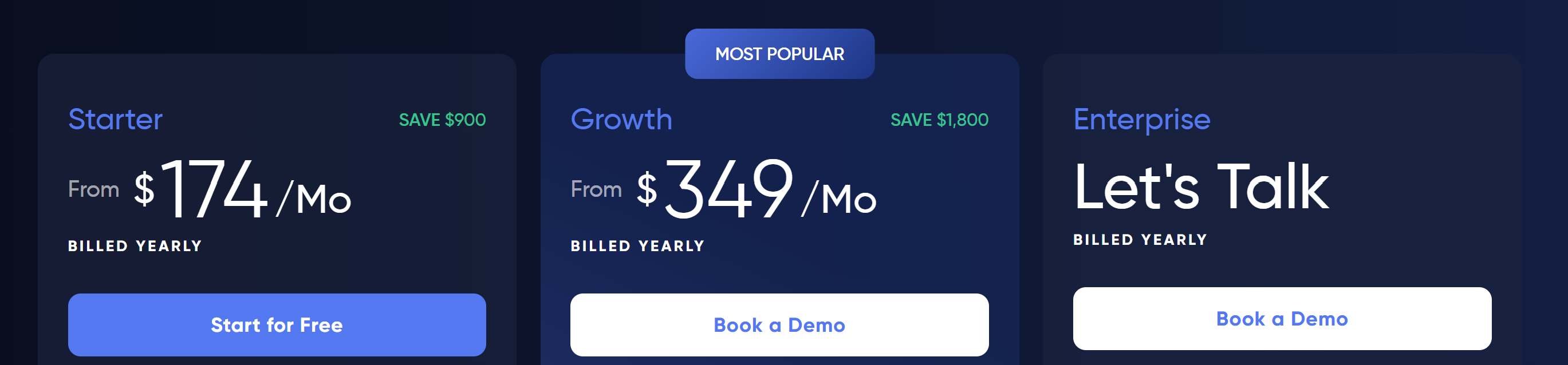
Pricing: $174/mo billed annually · G2: 4.7
3. Userpilot — onboarding plus product analytics
Pairs in-app onboarding with product analytics, which suits mid-market teams that want engagement data in the same place.
Pros:
- Onboarding and analytics live in one platform, so you can act on usage data without a separate tool.
Cons:
- If you already have an analytics platform, you end up paying for a feature you do not need.
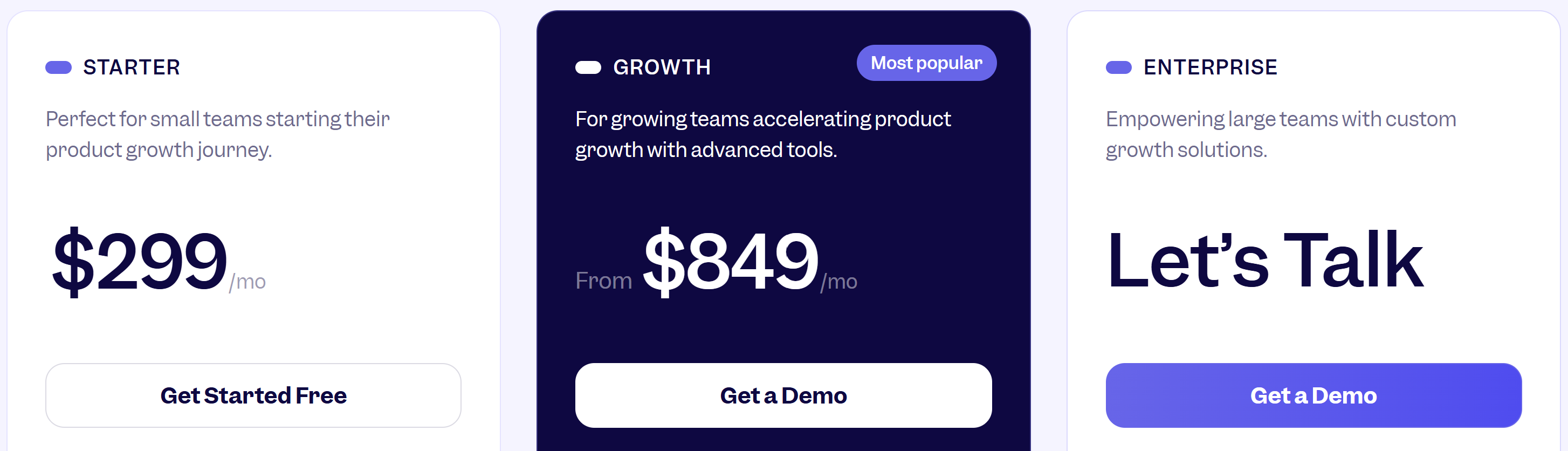
Pricing: $299/mo billed annually · G2: 4.6
4. Appcues — established and sales-led
One of the older names in onboarding, with a polished builder and strong brand recognition.
Pros:
- Mature feature set and a well-known brand; a safe, established choice.
Cons:
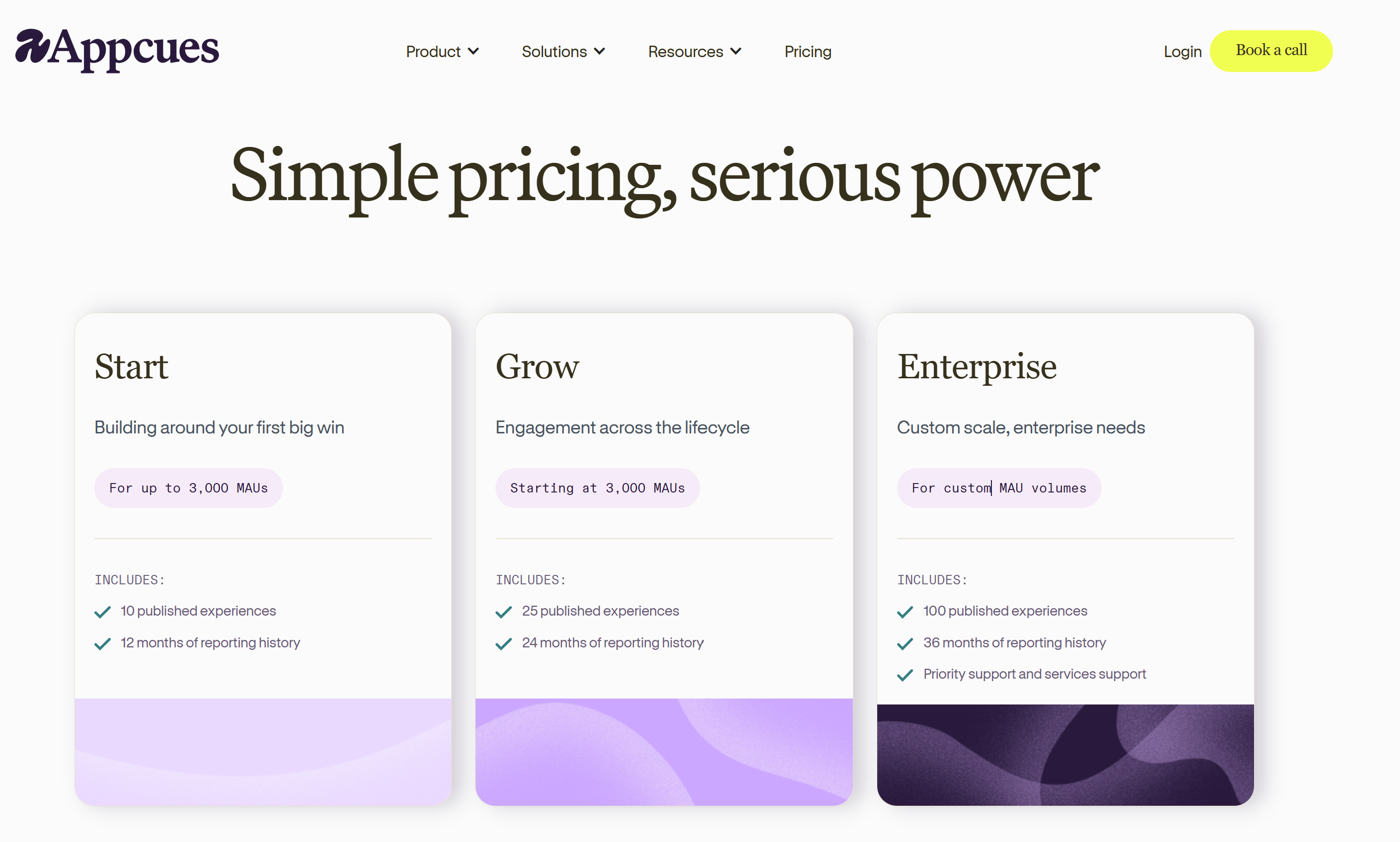
- It has moved to quote-only pricing, with third-party estimates putting real entry around $500/mo, so you cannot self-serve your way in.
Pricing: Quote-only (historically ~$500/mo) · G2: 4.6
5. Userflow — developer-friendly and API-first
Fast and clean, with strong theming and an API-first approach that developer-heavy teams like.
Pros:
- Built for technical teams that prioritize customization, theming and integration.
Cons:
- Pricing scales sharply with MAUs, so model the cost as you grow.
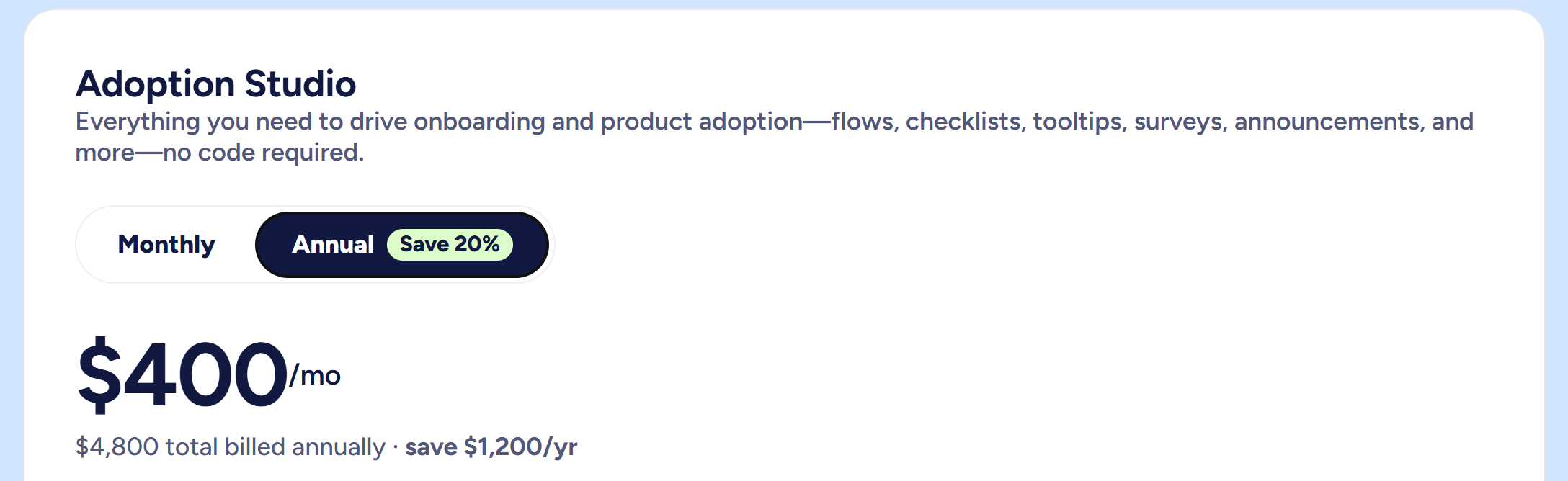
Pricing: $400/mo billed annually · G2: 4.8
6. Chameleon — advanced and highly customizable
Built for teams that want deep control over in-app experiences and are comfortable getting technical to get there.
Pros:
- Extensive customization for sophisticated UX needs.
Cons:
- Premium pricing, and getting the most out of it leans technical.
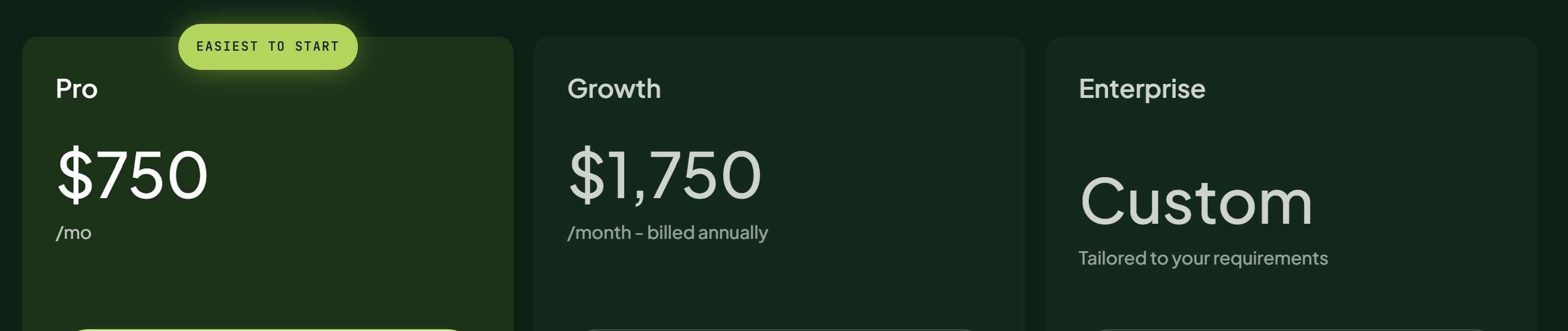
Pricing: Startup plan $279/mo (Pro tier $750/mo) · G2: 4.4
7. HelpHero — simple onboarding on the tightest budget
The value pick for teams that only want product tours and nothing they will not use.
Pros:
- The lowest entry cost among these alternatives.
Cons:
- Product tours only, no surveys, no knowledge base, so it is a point tool rather than an onboarding platform.
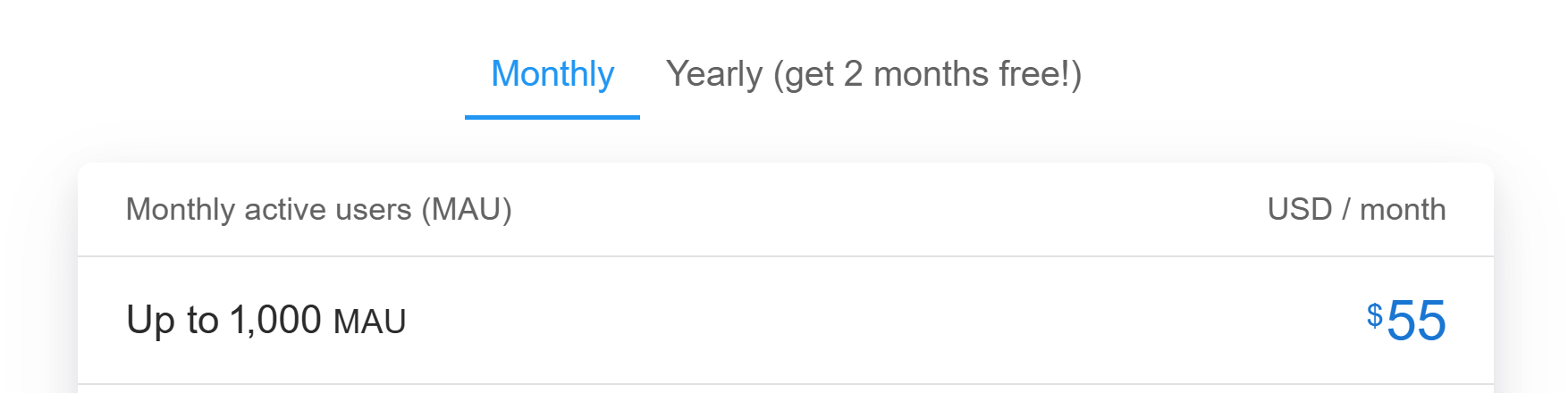
Pricing: $55/mo · G2: 4.8 (from just 18 reviews)
A closer look at Product Fruits
WalkMe asks you to run a project. Product Fruits asks you to install one snippet and start building the same afternoon. That difference is the whole pitch for fast-moving SMBs.
Everything sits in one place. Flows is the canvas-based builder for guided experiences: you lay out steps visually, branch them on conditions you define (what the user has done, which segment they are in, where they are in the product), and drop Elvin AI steps right into the journey. It is behavior-aware onboarding without an engineering ticket for every change.
Elvin AI powers the in-app help widget, with chat, your knowledge base and configured tabs, so users get answers in the moment instead of filing a ticket. Your documentation lives in the knowledge base, giving people a self-serve place to search. And the Product Fruits MCP connection lets an AI assistant like Claude or Cursor read your Product Fruits data over MCP, if you want adoption data inside your own AI assistant.
For a team leaving WalkMe because it was too heavy and too expensive for product onboarding, that is the trade in plain terms: the capabilities you actually use, a price you can see, and a rollout measured in hours.
Intuitive product that truly works, backed by genuinely helpful humans and AI
— Product marketing manager, mid-market · G2
How to choose the right WalkMe alternative
Start with the job, not the feature list. If you need enterprise employee adoption across internal systems, stay in the Whatfix, Userlane and Apty group and run a proper evaluation. If you need product onboarding inside your own app, pick from the seven above.
From there, three questions narrow it fast. What is your budget per month at your real MAU count? Do you need onboarding only, or onboarding plus analytics, help and feedback in one place? And how fast do you need to launch? If the answer is 'soon, self-serve, and without a sales call', the transparent-pricing tools rise to the top.
Frequently asked questions
Is WalkMe worth it for small teams?
Usually not. WalkMe is built to guide thousands of employees across many internal applications, and it is priced and implemented for that scale, a median around $39,000 a year and an 8–12 week rollout. Small and mid-market teams onboarding users inside a single SaaS product generally get more value, faster, from a self-serve tool like Product Fruits or UserGuiding.
What is the cheapest WalkMe alternative?
HelpHero has the lowest entry price at $55/mo for simple product tours. If you want more than a point tool, Product Fruits starts at $111/mo (billed annually) and bundles onboarding flows, a knowledge base, surveys and an in-app help center, which usually works out cheaper than stacking separate tools.
Is there a free WalkMe alternative?
Not really. WalkMe has no free plan, and the tools that used to offer generous free tiers have mostly moved upmarket. A few run free trials so you can test before you pay. If budget is the real constraint, a low-cost paid tool is the better route: HelpHero starts at $55/mo and Product Fruits at $111/mo, both far below enterprise DAP pricing.
What does the SAP acquisition mean for WalkMe users?
SAP acquired WalkMe for $1.5 billion in September 2024, and the roadmap has since tilted toward enterprise employee adoption inside the SAP ecosystem. For SAP customers running large internal rollouts, that is reassuring. For non-SAP, customer-facing teams, it raises a fair question about long-term fit and pricing, which is why many are re-evaluating at renewal.
How do I migrate off WalkMe?
It is more straightforward than the original rollout. These tools install with a single snippet and build in-app content in a visual editor, so most teams rebuild their core flows in days, not months. The practical work is recreating your key tours and checklists, far faster than the WalkMe implementation was.
Choose the best WalkMe alternative today
If you are onboarding users inside your own product, you do not need an enterprise change-management platform, and you should not pay for one. Product Fruits gives you tours, checklists, hints, announcements, surveys, an in-app help center and a knowledge base in one snippet, powered by Elvin AI, from $111/mo.
Start your free trial today, no card, no code, no commitment. Or book a demo and we'll map your existing Walkme flows to Product Fruits equivalents before you commit to anything.


Weekly newsletter
Get the latest releases, tips, articles, and exclusive interviews delivered to your inbox weekly—no spam!