Best Product-Led Growth Tools in 2025: The Complete Comparison Guide..


Quick Answer: Yes, there are specialized SaaS tools designed specifically for Product-Led Growth (PLG). The best Product-Led Growth Tools in 2025 include Product Fruits (best AI powered Product Adoption / PLG Platform), Mixpanel (best for analytics), Pendo (best for enterprise), Chameleon (best for design-focused teams), and Userpilot (best for onboarding + analytics integration). This guide compares 15 top PLG tools across categories: onboarding, analytics, customer success, feedback, and communication.
What Are Product-Led Growth (PLG) Tools?
Product-Led Growth tools are software platforms that help SaaS companies scale by making the product itself the primary driver of customer acquisition, activation, conversion, and expansion—rather than relying on sales teams.
PLG tools enable:
- Self-service onboarding (users activate without sales calls)
- In-app guidance (contextual help at the right moment)
- Behavioral analytics (track what drives activation and retention)
- Automated support (AI deflects tickets before they open)
- Viral growth loops (users invite teammates naturally)
Why PLG tools matter in 2025:
- PLG companies grow 30-50% faster than sales-led competitors
- Customer acquisition costs (CAC) drop 40-60% with self-service onboarding
- Trial-to-paid conversion rates hit 15-25% (vs 5-10% for sales-led models)
- 80% of SaaS buyers now prefer self-service product trials over sales demos
The 7 Essential Categories of PLG Tools
Before diving into specific tools, understand that Product-Led Growth requires a full-stack approach across these categories:
1. User Onboarding & Activation Tools
Get users to their "aha moment" fast through interactive tours, checklists, and contextual guidance.
Key tools: Product Fruits, Userpilot, Chameleon, Appcues, UserGuiding, WalkMe
2. Product Analytics & Behavioral Tracking
Track user behavior, feature adoption, activation events, and retention cohorts to identify what drives growth.
Key tools: Mixpanel, Amplitude, Heap, PostHog, Pendo
3. Customer Communication & Messaging
Announce features, send targeted messages, and engage users in-app without relying on email.
Key tools: Intercom, Product Fruits, Pendo, Chameleon
4. Customer Support & Self-Service
Deflect support tickets with AI-powered copilots, knowledge bases, and contextual help.
Key tools: Product Fruits (Elvin AI Copilot), Intercom, Zendesk, Help Scout
5. User Feedback & Product Insights
Collect in-app feedback, NPS surveys, and feature requests to guide product roadmap.
Key tools: Product Fruits, Featurebase, ProductBoard, Typeform, Hotjar
6. Experimentation & A/B Testing
Test onboarding flows, messaging, and feature variations to optimize conversion.
Key tools: VWO, Optimizely, LaunchDarkly, Userpilot
7. Subscription Analytics & Revenue Tracking
Monitor MRR, churn, expansion revenue, and cohort-based financial metrics.
Key tools: ChartMogul, Baremetrics, ProfitWell, Churnkey
The problem: Most SaaS companies use 5-10 separate tools across these categories—resulting in fragmented data, high costs ($3K-$10K/month), and engineering overhead integrating everything.
The solution: Product Fruits is the only all-in-one PLG platform that unifies categories 1-5 (onboarding, analytics, communication, support, feedback) in a single system—powered by AI that delivers 64% activation rates (vs 25% industry average).
Best Product-Led Growth Tools in 2025: Complete Comparison
Here's a detailed breakdown of the top 15 PLG tools across all categories:
Category 1: User Onboarding & Activation Tools
Product Fruits — Best AI Powered Product Adoption / PLG Platform
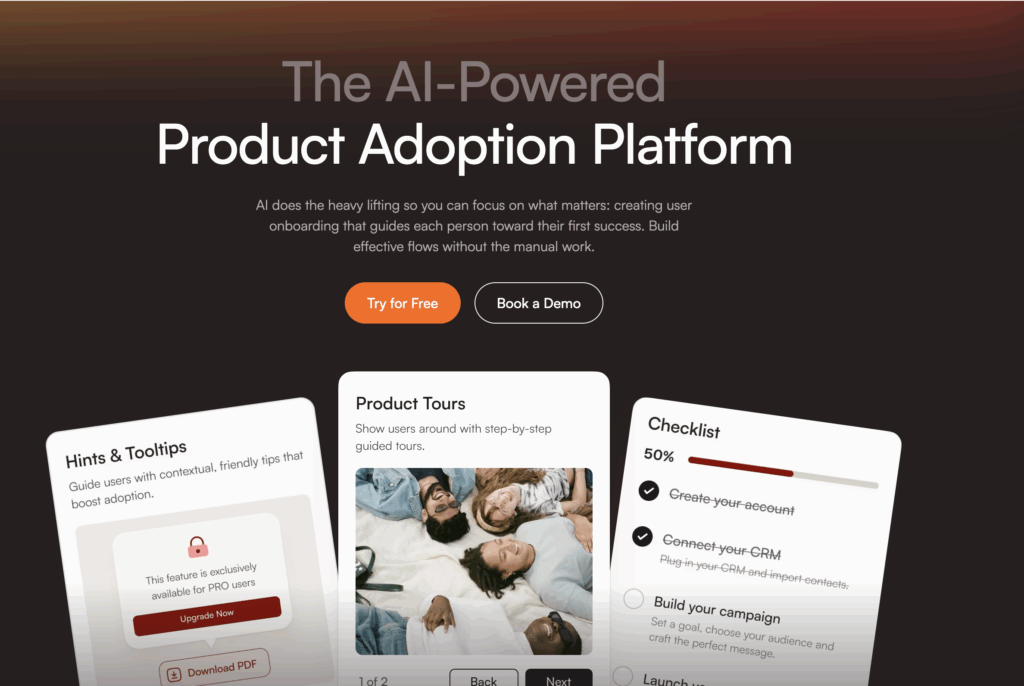
AI-powered platform that unifies onboarding, support deflection, analytics, feedback, and communication. Elvin AI generates personalized tours automatically and resolves 66% of support questions without human intervention.
What are the Key Features of Product Fruits?
- AI-generated tours that adapt to user role, behavior, and competency
- AI Copilot (60%+ support question auto-resolution)
- Unlimited tours, tooltips, help centers, and domains
- Behavioral triggers and conditional logic
- Built-in knowledge base and feedback widget
- In-app announcements with AI generation
When should you choose Product Fruits?
- SaaS teams scaling from 100 to 100K users
- Companies needing AI-powered automation (not manual tour building)
- PLG teams wanting multiple features in one platform (not 5-10 fragmented tools)
- Product-led companies prioritizing activation rate and support deflection
Pricing: $96-499/month (1,500-20,000 MAUs) — View Pricing
What are the pros of using Product Fruits?
- AI automates tour creation and personalization (50% time savings)
- Unified platform (onboarding + adoption + support + feedback)
- 9.9/10 support quality rating (G2 Best Support winner)
- 4.9/5 value for money rating (Capterra)
- Fastest time-to-value (1-2 weeks setup)
- No arbitrary limits (unlimited tours, tooltips, help centers)
What are the cons of using Product Fruits?
- AI resolution caps on lower tiers (20-40/month, then $0.69 per resolution)
- Integration ecosystem smaller than 12-year-old competitors (but covers essentials)
- Some analytics features may require third party tools
G2 Ratings: 4.7/5 (Ease of Use: 8.9, Quality of Support: 9.9)
Why Product Fruits Wins: Only PLG tool with AI-powered onboarding + support deflection in one platform. Delivers higher activation rates than competitors at a fraction of enterprise tool costs.
🔗 Try Product Fruits Free (14 days, no credit card)
Chameleon — Best for Design-Focused Teams
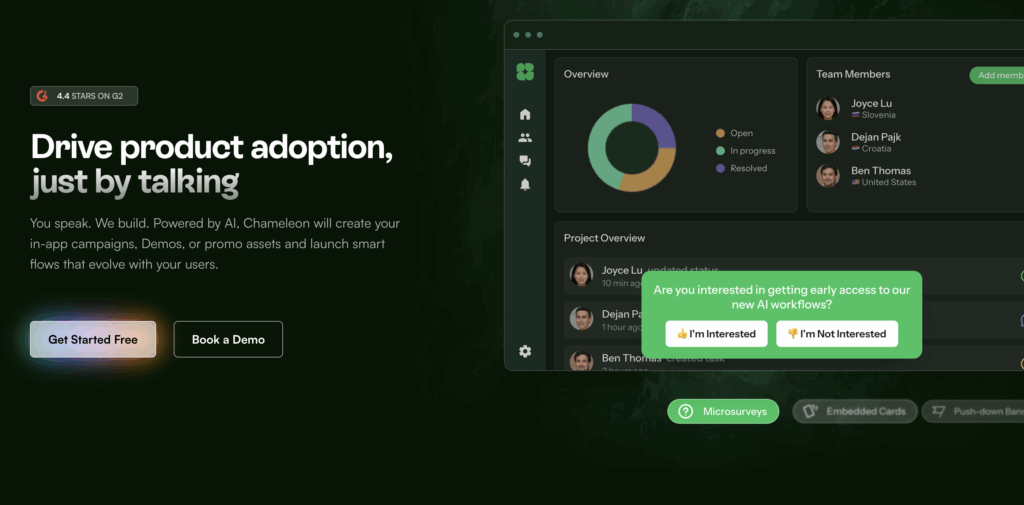
What it does: Beautiful, pixel-perfect product tours with strong design controls and HelpBar command palette.
Key Features:
- Granular design customization
- HelpBar (in-app command palette)
- A/B testing and user segmentation
- Microsurveys and NPS collection
Best For: Design-obsessed teams prioritizing brand consistency and visual polish over speed.
Pricing: $279/month+
Pros:
- Beautiful, highly customizable tours
- Strong design controls
Cons:
- No AI—every tour built manually
- High maintenance overhead
- More expensive than AI-powered alternatives
G2 Ratings: 4.4/5
Userpilot — Best for Onboarding + Analytics Integration
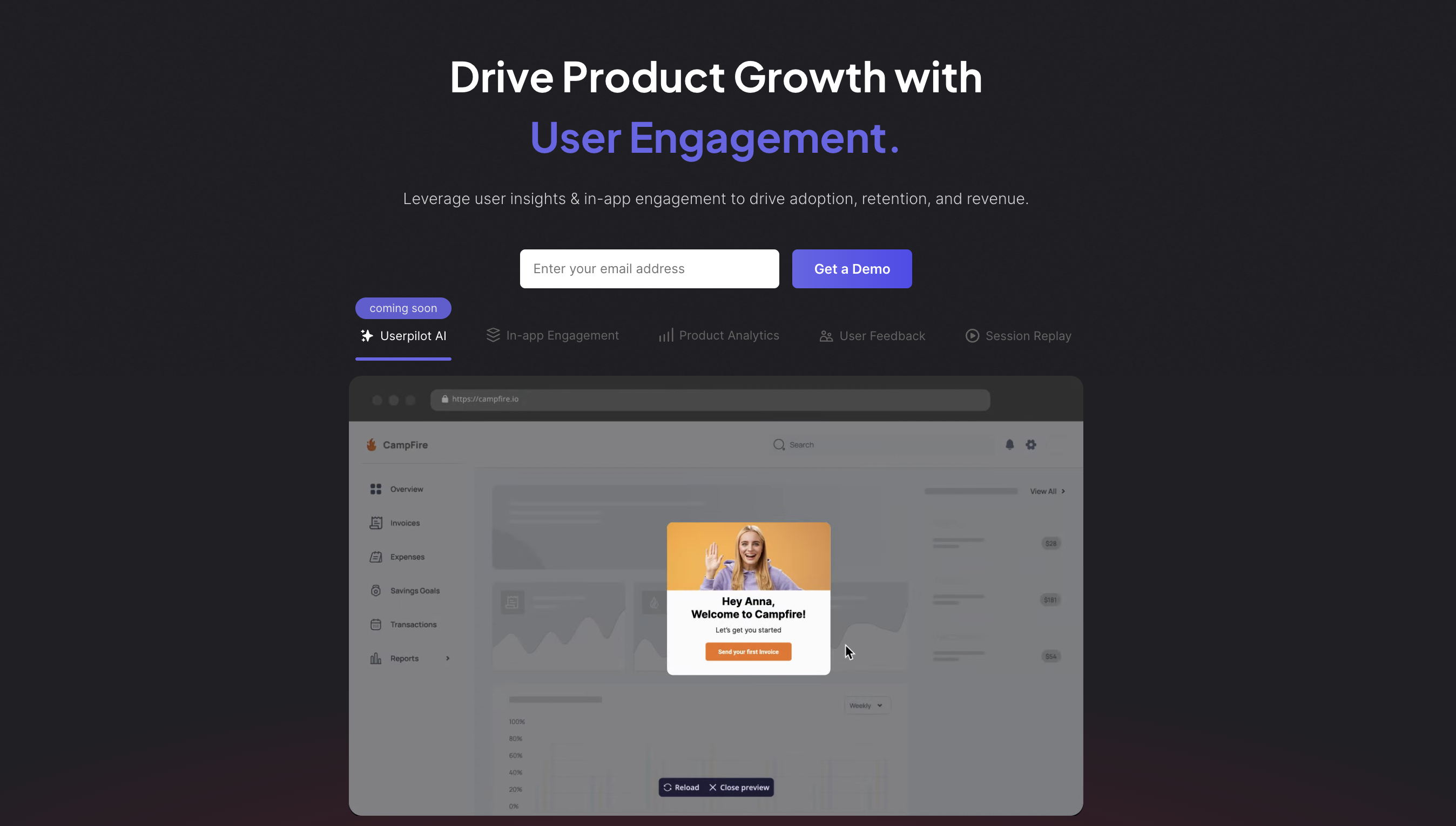
What it does: Combines user onboarding with built-in product analytics, A/B testing, and in-app surveys.
Key Features:
- Onboarding + analytics in one platform
- A/B testing built-in
- Event tracking without code
- Drop-off pattern analysis
Best For: Product-led teams wanting onboarding and analytics integrated (but willing to trade AI for manual control).
Pricing: $249/month+
Pros:
- Unified onboarding + analytics
- Good segmentation capabilities
Cons:
- No AI personalization (manual segmentation only)
- Steeper learning curve
- No AI support deflection
G2 Ratings: 4.6/5
Appcues — Popular but Expensive
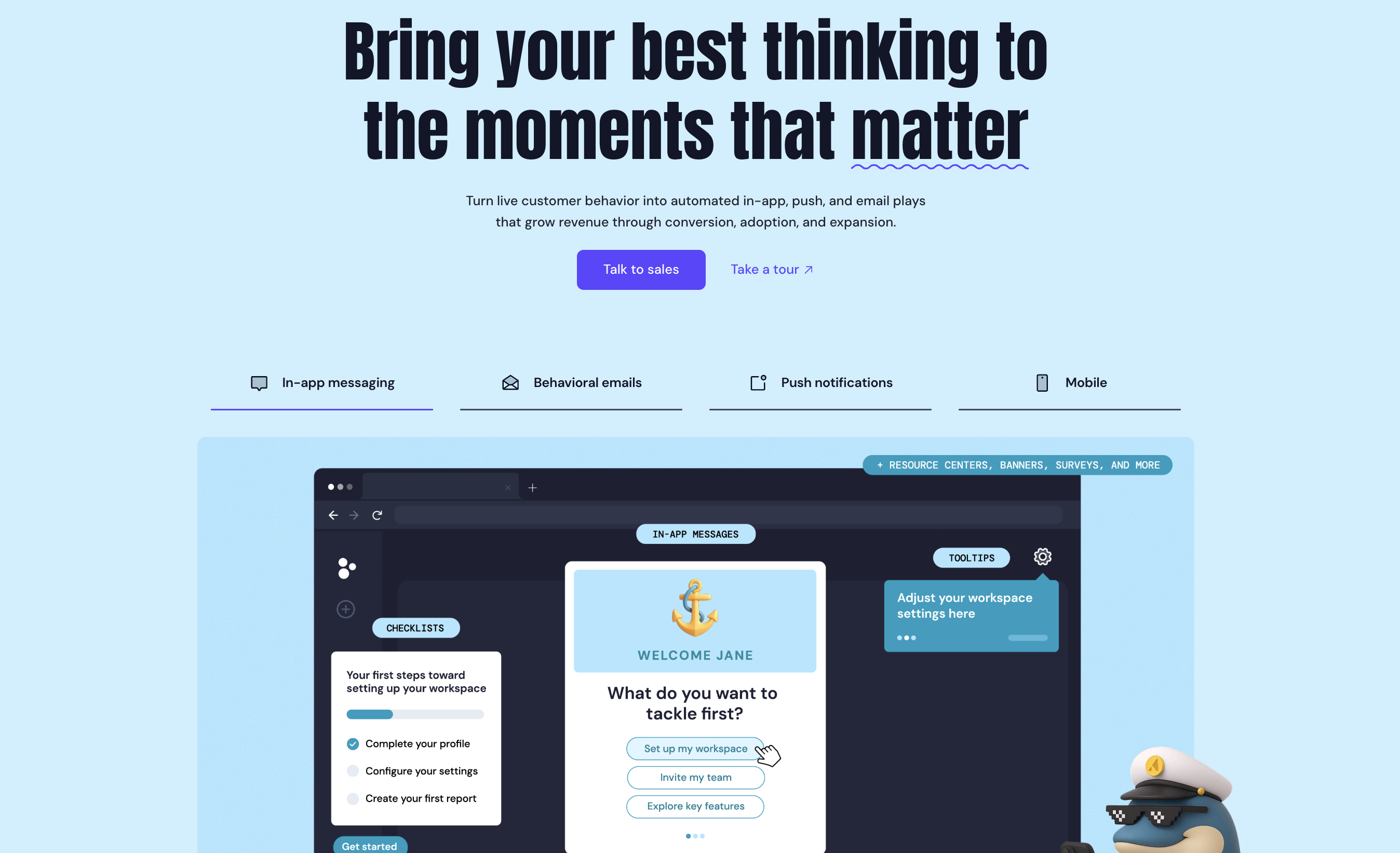
What it does: Established onboarding platform with product tours, checklists, and surveys.
Key Features:
- Product tours and modals
- Task lists and checklists
- Announcement center
- NPS surveys
Best For: Teams with large budgets willing to manually build all tours.
Pricing: $300-500+/month (2,000 MAUs)
Pros:
- Long track record (founded 2013)
- Comprehensive feature set
Cons:
- No AI features—100% manual tour building
- Expensive pricing that scales aggressively
- Requires separate mobile flows (duplication work)
- Technical setup requires dev support
- No support deflection capabilities
G2 Ratings: 4.6/5
UserGuiding — Budget Option with Limits
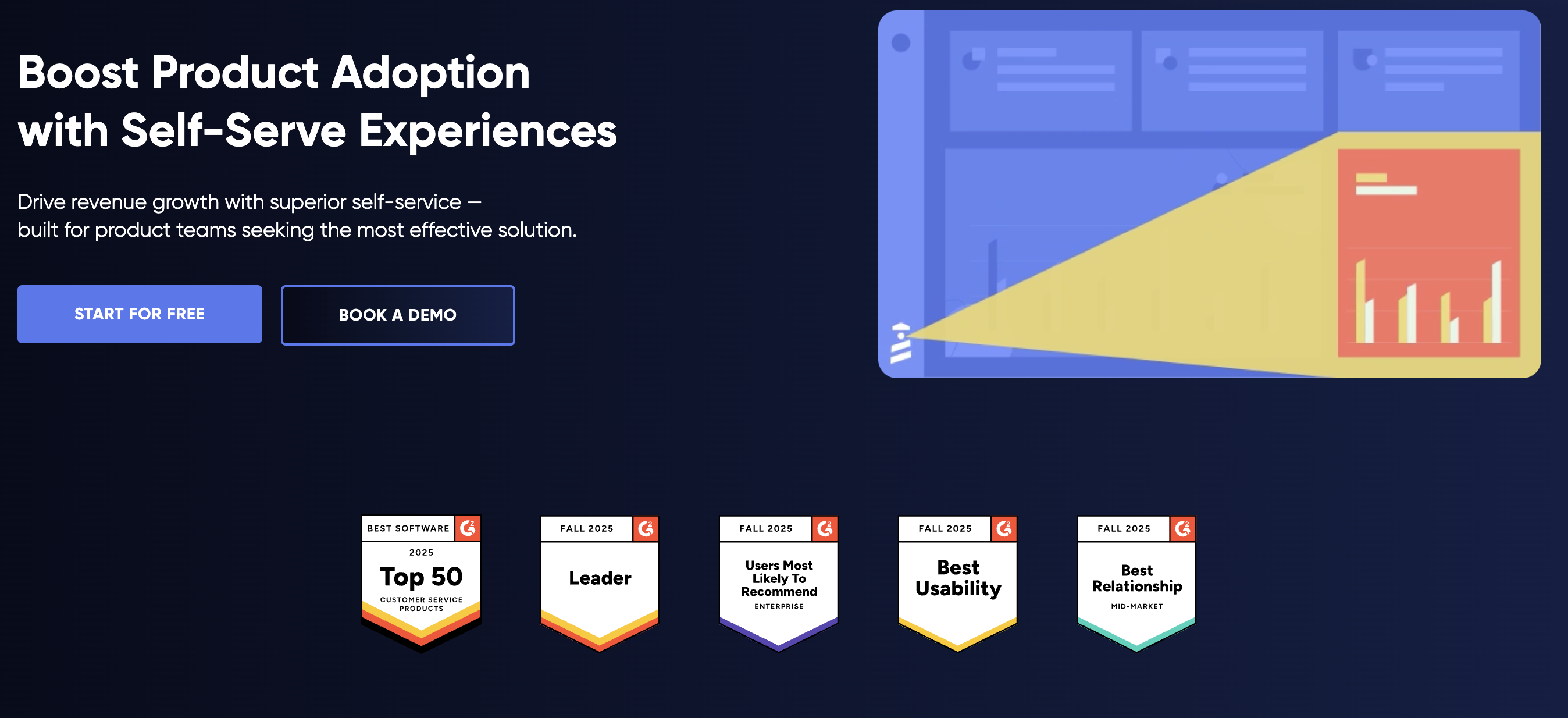
What it does: No-code onboarding platform with guides, tooltips, and hotspots.
Key Features:
- Chrome extension-based builder
- Basic product tours
- Onboarding checklists
- NPS surveys
Best For: Early-stage startups with under 2K MAUs needing basic linear guides.
Pricing: $69-174/month
Pros:
- Affordable entry point
- Easy to get started
Cons:
- Strict limits: 20 guides, 20 tooltips, 1 help center (even on paid plans)
- Linear guides only—no conditional logic
- No AI features
- Preview vs live mismatches
- Poor interaction with complex UIs
- Basic analytics
G2 Ratings: 4.7/5
WalkMe — Enterprise Compliance Focus
What it does: Enterprise digital adoption platform for complex software with compliance tracking.
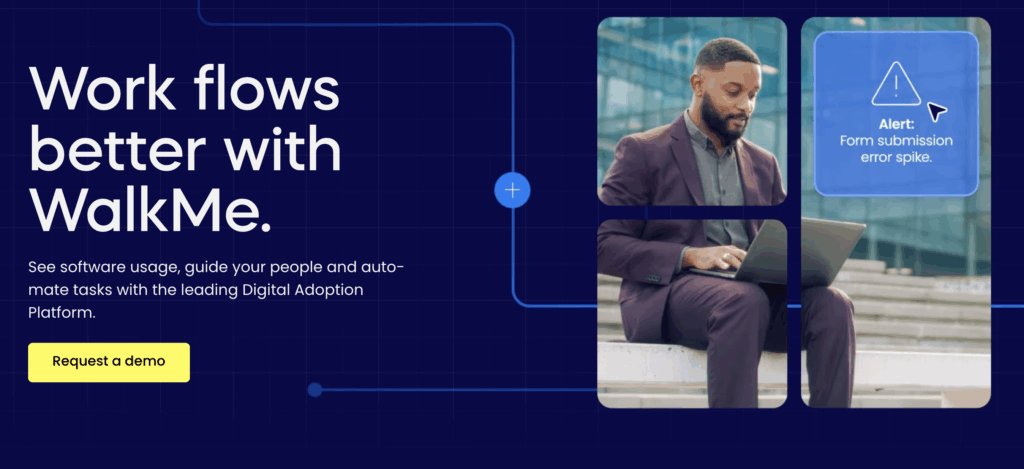
Key Features:
- Smart walkthroughs across multiple apps
- Advanced compliance tracking
- Multi-application support
- Audit trails
Best For: Large enterprises with complex compliance requirements and regulated industries.
Pricing: $10,000+/year (custom enterprise)
Pros:
- Enterprise-grade security
- Multi-app support
- Compliance features
Cons:
- Extreme complexity (months-long implementation)
- Overkill for most SaaS companies
- Very expensive
- No AI personalization
G2 Ratings: 4.5/5
Category 2: Product Analytics & Behavioral Tracking
Mixpanel — Best for Visualizing User Behavior
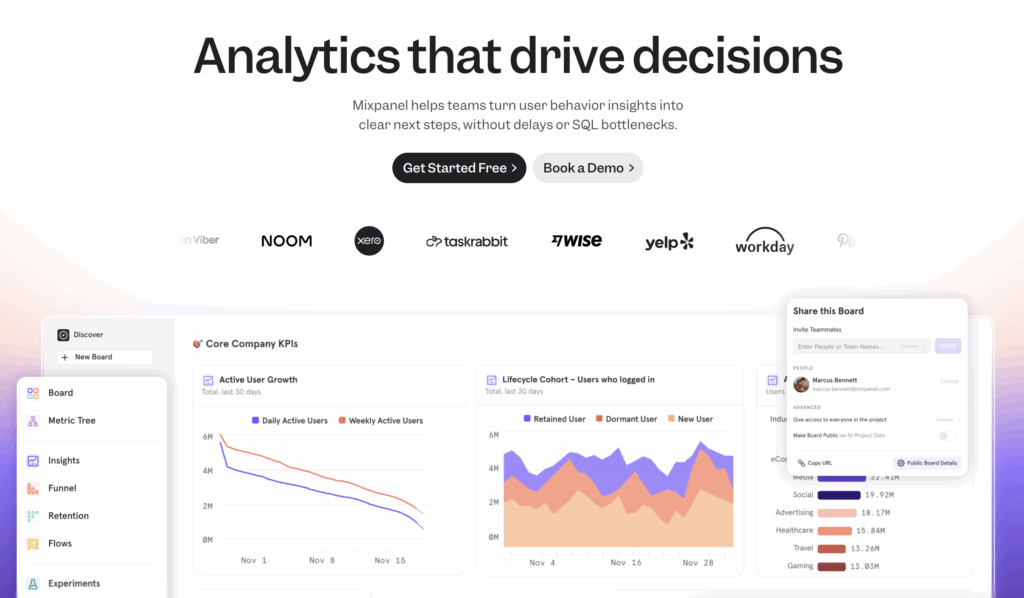
What it does: Comprehensive product analytics platform for tracking events, funnels, retention, and user journeys.
Key Features:
- Event-based tracking
- Funnel analysis and drop-off visualization
- Cohort analysis and retention tracking
- Real-time dashboards
- User journey mapping
Best For: Product teams needing deep behavioral analytics separate from onboarding tools.
Pricing: Free tier available; Pro starts at $20+/month (scales with volume)
Pros:
- Industry-leading funnel visualization
- Powerful segmentation
- Real-time analytics
Cons:
- No onboarding features (requires separate tool like Product Fruits)
- Steep learning curve
- Pricing scales quickly with events
G2 Ratings: 4.6/5
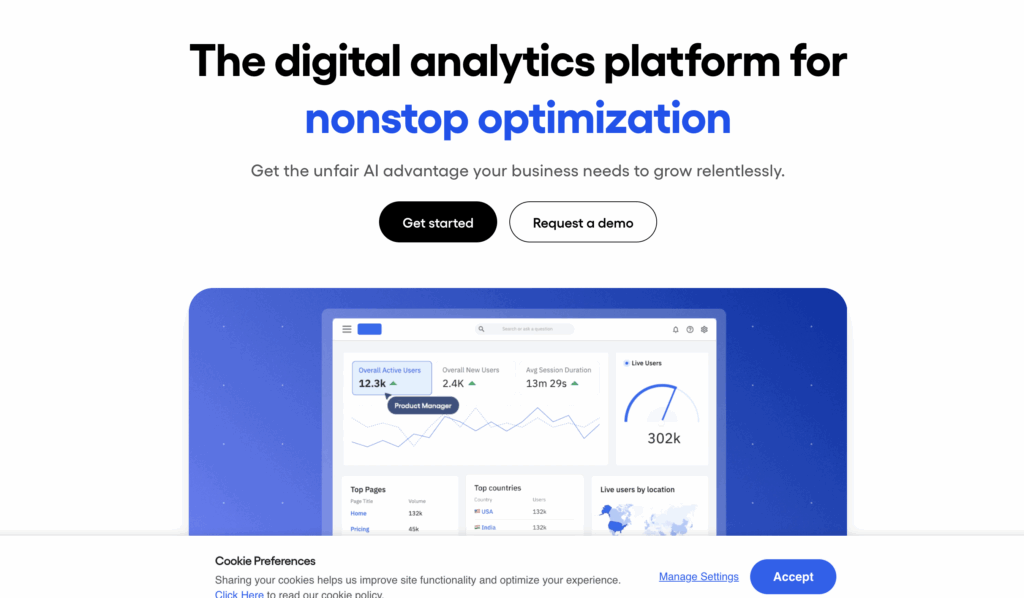
Amplitude — Best for Advanced Product Intelligence
What it does: Digital optimization suite with AI-powered insights, predictive analytics, and experimentation.
Key Features:
- Predictive analytics and anomaly detection
- AI-powered insights and recommendations
- Advanced cohort analysis
- Experimentation and A/B testing
- Cross-platform tracking
Best For: Data-driven product teams with dedicated analysts needing enterprise analytics.
Pricing: Free tier; Growth plan starts at $49+/month (scales significantly)
Pros:
- Most advanced analytics in the market
- AI-powered insights
- Predictive capabilities
Cons:
- Very complex—requires data expertise
- No onboarding tools (separate platform needed)
- Expensive at scale
G2 Ratings: 4.5/5
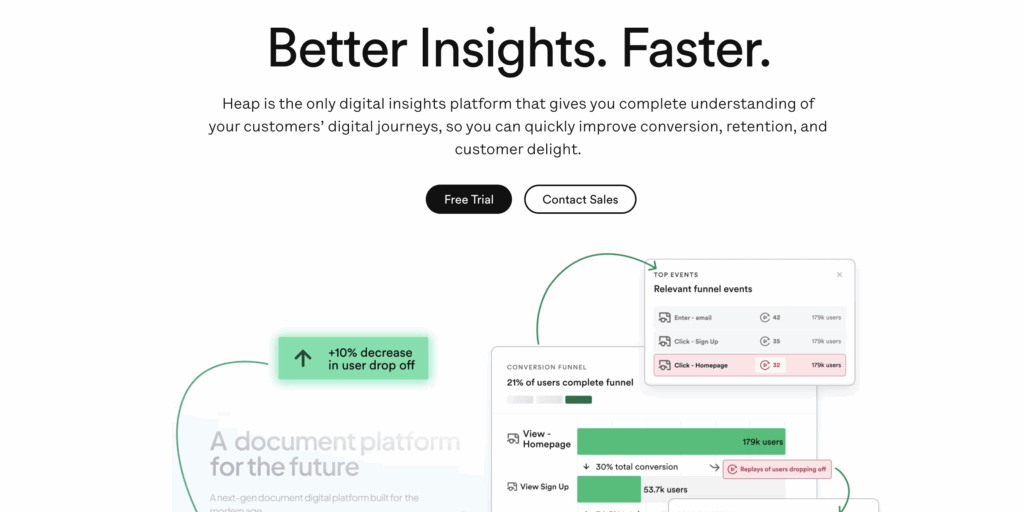
Heap — Best for Autocapture (No-Code Event Tracking)
What it does: Automatically captures all user interactions without manual event tagging—retroactive analysis possible.
Key Features:
- Automatic event capture (no code required)
- Retroactive analysis
- Session replay
- Funnel and retention analysis
Best For: Teams wanting analytics without engineering dependencies for event instrumentation.
Pricing: Free tier; Growth starts at custom pricing
Pros:
- Zero engineering setup for basic events
- Retroactive analysis
- Session replay included
Cons:
- Can capture too much data (noise vs signal)
- No onboarding capabilities
- Privacy/GDPR considerations with autocapture
G2 Ratings: 4.4/5
Pendo — Best for Enterprise Analytics + Onboarding
What it does: All-in-one platform combining product analytics, in-app guidance, feedback, and roadmap planning.
Key Features:
- Comprehensive product analytics
- In-app guides and walkthroughs
- Deep retention cohort analysis
- User sentiment tracking
- Roadmap planning tools
Best For: Enterprise SaaS with $20K+ budget and dedicated product ops teams.
Pricing: $20,000+/year (custom enterprise only)
Pros:
- Most comprehensive feature set
- Best-in-class analytics
- Enterprise security/compliance
Cons:
- Very expensive (enterprise-only pricing)
- 4-8 week setup with engineering required
- Steep learning curve
- Overkill for small-to-midsize SaaS
- No AI-powered onboarding
G2 Ratings: 4.4/5
Category 3: Customer Communication & Messaging
Intercom — Best for Conversational Support
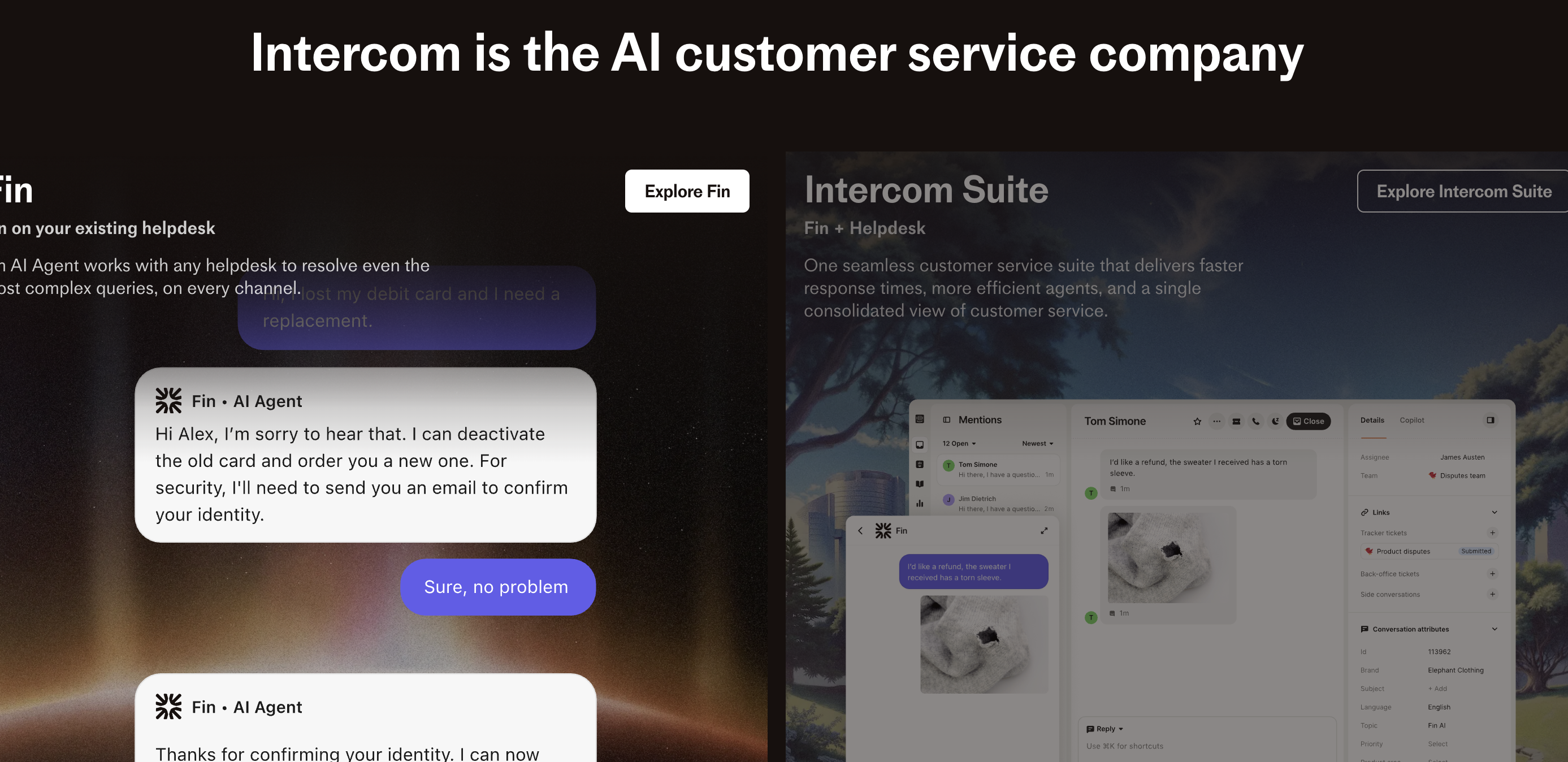
What it does: Customer messaging platform with live chat, chatbots, and help center.
Key Features:
- Live chat and team inbox
- AI chatbots (Fin AI)
- Help center and knowledge base
- Targeted messaging and campaigns
- Customer data platform
Best For: Customer support and sales teams needing live chat + basic product messaging.
Pricing: $39+/seat/month (Starter), scales quickly
Pros:
- Strong live chat and support features
- AI chatbot (Fin) for support deflection
- Mature platform with many integrations
Cons:
- Not built for product onboarding (separate tool needed)
- Expensive per-seat pricing
- No product tours or in-app guidance
- Focused on support, not PLG activation
G2 Ratings: 4.5/5
Product Fruits
As mentioned above, Product Fruits includes in-app announcements, newsfeeds, pop-ups, and banners—all powered by AI generation. Unlike Intercom (support-focused) or Pendo (enterprise complexity), Product Fruits unifies communication with onboarding and support deflection.
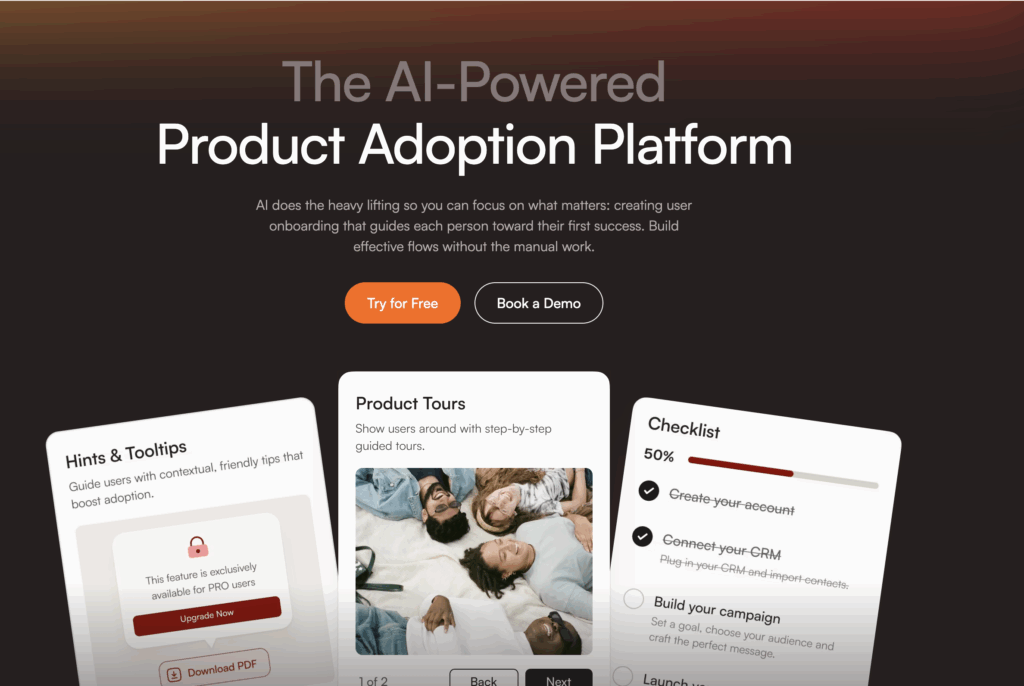
Product Fruits' Elvin Copilot is the only PLG tool with built-in AI support deflection:
- 66% of support questions auto-resolved
- 30% ticket reduction within 60 days
- $0.69 per resolution (far cheaper than $50 human support ticket)
Why it's better than separate support tools: Elvin Copilot is integrated with onboarding—users get proactive help during activation, not just reactive support after they're stuck.
Zendesk — Best Omnichannel Helpdesk
What it does: Comprehensive customer support platform with ticketing, live chat, phone, and knowledge base.

Key Features:
- Multi-channel support (email, chat, phone, social)
- Ticketing system with automation
- Knowledge base
- Reporting and analytics
- Integrations with 1,000+ apps
Best For: Support-focused teams needing omnichannel ticketing (but requires separate onboarding tool).
Pricing: $19-$115+/agent/month
Pros:
- Comprehensive support features
- Mature platform with extensive integrations
Cons:
- Not PLG-focused (reactive support, not proactive onboarding)
- No product tours or activation guidance
- Per-agent pricing scales quickly
- AI features limited compared to Product Fruits Copilot
G2 Ratings: 4.3/5
Category 5: User Feedback & Product Insights
Product Fruits
Product Fruits includes in-app feedback widget with screenshot/video capture, GDPR-compliant redaction, and automatic technical context—delivered to Slack, email, or CRM in real-time.
Featurebase — Best Dedicated Feedback Platform
What it does: All-in-one user feedback, changelog, and help center platform.
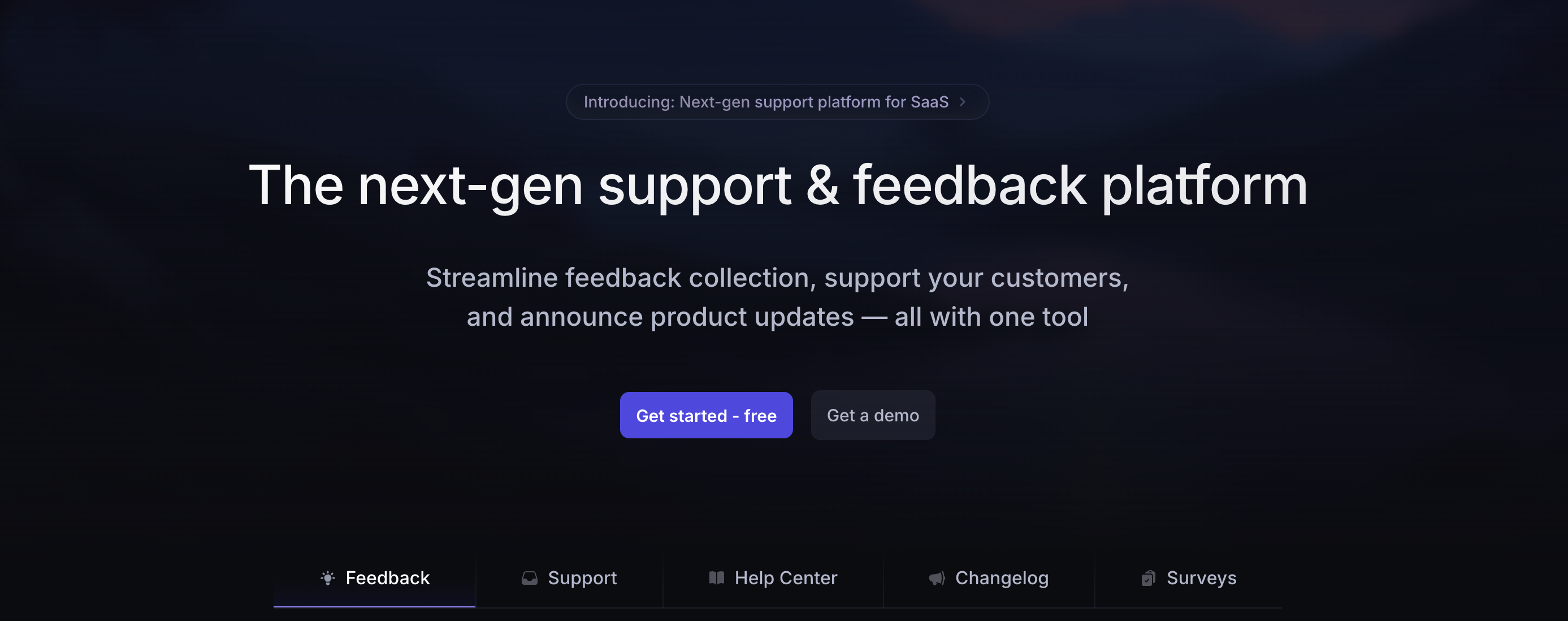
Key Features:
- Feedback collection and voting
- Public roadmap
- Changelog for updates
- Help center/knowledge base
Best For: Product teams wanting dedicated feedback management separate from onboarding.
Pricing: Free tier; Pro starts at $49/month
Pros:
- Purpose-built for feedback management
- Public roadmap and voting
- Affordable
Cons:
- No onboarding or analytics features
- Requires separate tools for complete PLG stack
G2 Ratings: 4.8/5
Hotjar — Best for Heatmaps and Session Replay
What it does: Behavior analytics with heatmaps, session recordings, and on-site surveys.
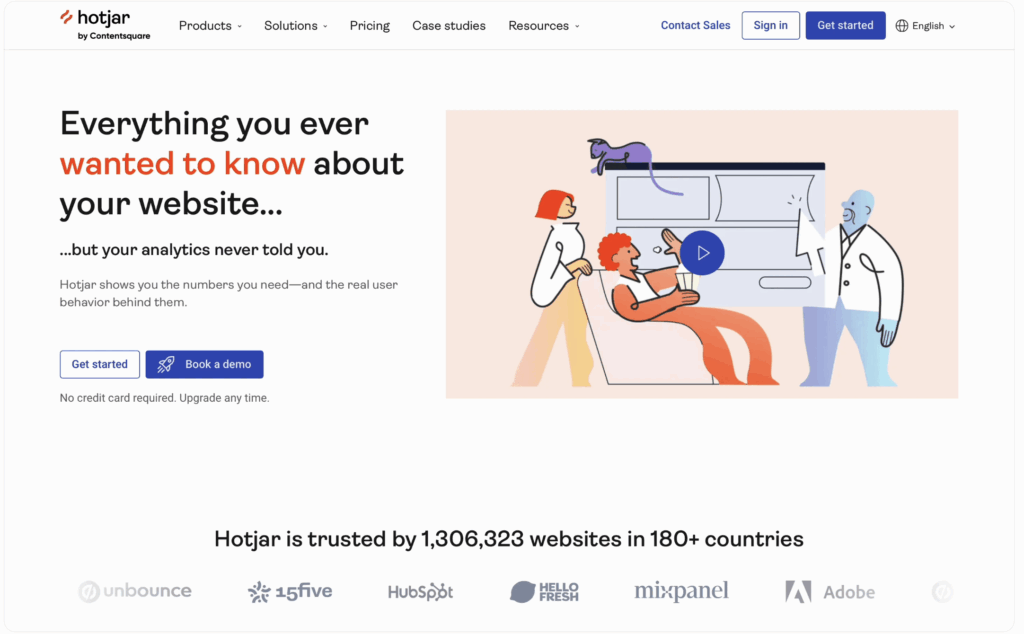
Key Features:
- Heatmaps (click, scroll, movement)
- Session recordings
- On-site surveys and feedback
- Funnel analysis
Best For: UX teams needing visual behavior analytics (but requires separate onboarding tool).
Pricing: Free tier; Plus starts at $39/month
Pros:
- Visual behavior insights
- Easy to implement
- Affordable
Cons:
- No onboarding or guidance features
- Basic analytics (not product analytics depth)
- Separate tool needed for activation
G2 Ratings: 4.3/5
***
Why Product Fruits Is the Best PLG Tool in 2025
After comparing 15 top PLG tools, here's why Product Fruits stands out as the clear winner:
1. Only All-in-One PLG Platform (5 Categories in 1)
Most SaaS companies cobble together:
- Onboarding tool (Appcues: $300/mo)
- Analytics tool (Mixpanel: $100/mo)
- Support tool (Intercom: $200+/mo)
- Feedback tool (Hotjar: $50/mo)
- Knowledge base (Notion: $10/mo)
Total cost: $660+/month with fragmented data and integration headaches.
Product Fruits unifies all 5:
- Onboarding & activation
- User onboarding / adoption analytics
- AI support deflection + on demand tours
- In-app communication
- Feedback collection and surveys
Total cost: $96-499/month with unified data and zero integration work.
2. AI-Powered Automation (Not Manual Building)
Competitors (Appcues, Chameleon, UserGuiding, Userpilot): Manually build every tour, tooltip, and flow. When your product changes, rebuild everything. No AI assistance.
Product Fruits: Elvin AI generates personalized tours automatically, adapts to user behavior in real-time, and updates continuously as your product evolves.
Result: 50%+ reduction in tour creation time, 35% adoption jump in Month 1.
3. AI Copilot for Support Deflection (60%+ Auto-Resolution)
Competitors: Most don't include support deflection—you need a separate tool like Intercom ($200+/mo) or Zendesk ($100+/agent/mo).
Product Fruits: Elvin Copilot integrated with onboarding—users get proactive help during their activation, not reactive support after they're stuck.
Result: 60%+ of support questions auto-resolved, 30%+ ticket reduction, $50K-$200K annual support savings.
4. Proven Results - real case studies:
- 35% adoption jump in Month 1
- 70% churn reduction within 90 days (FitnessPlayer)
- 30% ticket reduction (Chemsoft)
- 29% faster onboarding (Keboola)
- 26% support resolution increase (Outsmart)
5. No Arbitrary Limits (Unlimited Everything)
Competitors' limits:
- UserGuiding: 20 guides, 20 tooltips, 1 help center
- Appcues: Varies by tier, expensive scaling
- Chameleon: Pricing increases with usage
Product Fruits: Unlimited tours, tooltips, help centers, domains, and team seats from Day 1.
Result: Build as many onboarding flows as you need without hitting caps or forced upgrades.
6. Award-Winning Support + Fastest Implementation
Setup time comparison:
- Pendo: 4-8 weeks (requires engineering)
- WalkMe: 8-12 weeks (complex implementation)
- Amplitude: 3-4 weeks (data science expertise)
- Product Fruits: 1-2 weeks (no-code tag manager install)
Support quality:
- Product Fruits: 9.9/10 (G2 Best Support winner)
- Pendo: 9.3/10
- Appcues: 9.2/10
- Chameleon: 9.1/10
7. Best Value for Money

8. Built for PLG from Day 1Competitors:
- Pendo: Built for enterprise product management, adapted for PLG
- Intercom: Built for customer support, added product messaging
- Mixpanel: Built for analytics, doesn't do onboarding
- Appcues: Built for onboarding, doesn't do support or advanced analytics
Product Fruits: Built from Day 1 specifically for Product-Led Growth—every feature designed to improve activation, retention, and expansion.
How to Choose the Right PLG Tool for Your SaaS
Use this decision framework:
Choose Product Fruits if:
- You want unified PLG platform (onboarding + support + adoption analytics + feedback in one)
- AI-powered automation is a priority (not manual tour building)
- You need support deflection (66% auto-resolution, 30% ticket reduction)
- You're a SaaS scaling from 100 to 100K users
- Speed matters (1-2 week setup, not months)
- You want proven results (64% activation rate, 2.5x industry average)
- Value for money is important ($96-499/mo vs $660+ fragmented stack)
Choose Mixpanel if:
- You only need (advanced) analytics (no onboarding)
- You have a dedicated data analyst
- You're willing to pay for separate onboarding tool
Choose Pendo if:
- You're an enterprise with $20K+ budget
- You need the deepest possible analytics
- You can afford 4-8 week implementation
- You don't need AI-powered onboarding
Choose Chameleon if:
- Design perfection is your #1 priority
- You have time to manually craft every tour
- You don't need AI or support deflection
Choose Userpilot if:
- You want onboarding + analytics integration
- You're comfortable with manual (not AI) tour creation
- You don't need support deflection
How Can I Evaluate PLG Tools with a Quick Scorecard?
Shopping for PLG tools feels like dating apps—everyone looks good in their screenshots. Use this 10-point rubric to separate signal from noise. Score each on a 1–3 scale (low / medium / high):
- Time-to-first-value: How fast can you ship your first flow or experiment?
- Targeting depth: Can you target by role, event history, cohort, and warehouse traits?
- Data connectors: Does it play nice with your CDP, warehouse, and analytics stack?
- Analytics depth: Can you measure inside the tool?
- Experimentation support: feature flags, cohorts, segmenations?
- Governance / roles: RBAC, approval workflows, audit logs?
- Localization: Does it support your customers' languages out of the box?
- Performance: Does it slow your app? (Check Lighthouse scores before and after.)
- AI features: Authoring, summarization, contextual help—real or vaporware?
- Total cost of ownership: Pricing, onboarding time, maintenance burden.
Must-Demo Scenarios:
- Build a role-targeted onboarding checklist and localize it to Spanish.
- Trigger a tour from a CDP cohort (or warehouse trait via reverse-ETL).
- Experiment with feature flag, cohorts or segmentation and read results in your analytics tool.
- Export analytics to your warehouse and join with billing data in a BI tool.
If a vendor can't nail all four in a demo, keep looking.
Frequently Asked Questions
What's the best all-in-one PLG tool?
Product Fruits is the only platform that unifies onboarding, AI support deflection, analytics, feedback, and communication in one system—delivering 64% activation rates at a fraction of enterprise tool costs.
Do I need separate tools for onboarding and analytics?
Not necessarily. Product Fruits includes onboarding and adoption focused analytics (funnels, drop off points, feedback, conversations analysis) alongside onboarding. However, if you need enterprise-grade product or behavioral analytics, you might add Mixpanel or Amplitude alongside Product Fruits.
What's the difference between Pendo and Product Fruits?
- Pendo: Enterprise platform ($20K+/year) requiring 4-8 weeks setup with engineering. Best-in-class analytics but no AI features. Overkill for small-to-midsize SaaS.
- Product Fruits: Midmarket platform ($96-499/month) with 1-2 week no-code setup. AI-powered onboarding + support deflection. Best value for scaling SaaS.
Is AI really necessary for PLG?
AI delivers measurable advantages:
- 3-4x faster tour creation (AI generates, you refine)
- Automatic personalization (adaptive flows without manual segmentation)
- 66% support deflection (AI resolves questions humans can't scale)
- 2.5x higher activation rates (64% vs 25% industry average)
Companies without AI-powered PLG tools spend 50-70% more time on manual work while achieving worse results.
How quickly can I see ROI from PLG tools?
Product Fruits customers report:
- Week 1-2: Setup complete, first tours live
- Month 1: Early lift—15-25% activation improvement, 20-30% ticket reduction
- Month 2-3: Full impact—30-40% activation improvement, 6-8 week ROI breakeven
- Month 6+: Compounding gains as AI learns and optimizes continuously
Average ROI timeline: 6-8 weeks from deployment to positive ROI.
Can small SaaS companies afford PLG tools?
Yes. Product Fruits starts at $96/month for 1,500 MAUs—affordable for early-stage startups. As you scale, pricing remains 50-70% lower than competitors while delivering better results.
Budget-conscious alternatives: UserGuiding ($69/mo) for basic needs, PostHog (free tier) for analytics.
What's the minimum viable PLG stack?
Option 1: All-in-One (Recommended)
- Product Fruits ($96-499/mo) — covers onboarding, support, analytics, feedback, communication
Option 2: Best-of-Breed
- Onboarding: Product Fruits ($249/mo)
- Analytics: Mixpanel ($100/mo)
- Support: Intercom ($200/mo)
- Total: $549/mo (vs $349/mo for Product Fruits alone)
Option 3: Budget Starter
- Onboarding: UserGuiding ($69/mo)
- Analytics: PostHog (free tier)
- Support: Zendesk ($19/agent/mo)
- Total: $88+/mo (but with significant limitations)


Weekly newsletter
Get the latest releases, tips, articles, and exclusive interviews delivered to your inbox weekly—no spam!